


If you’ve ever wandered through a spiritual bazaar or scrolled past a rudraksha post online, chances are you’ve come across the 5 Mukhi Rudraksha. It’s the most common one out there—and there’s a good reason for that. Let me walk you through everything you actually need to know before you buy a 5 Mukhi Rudraksha.
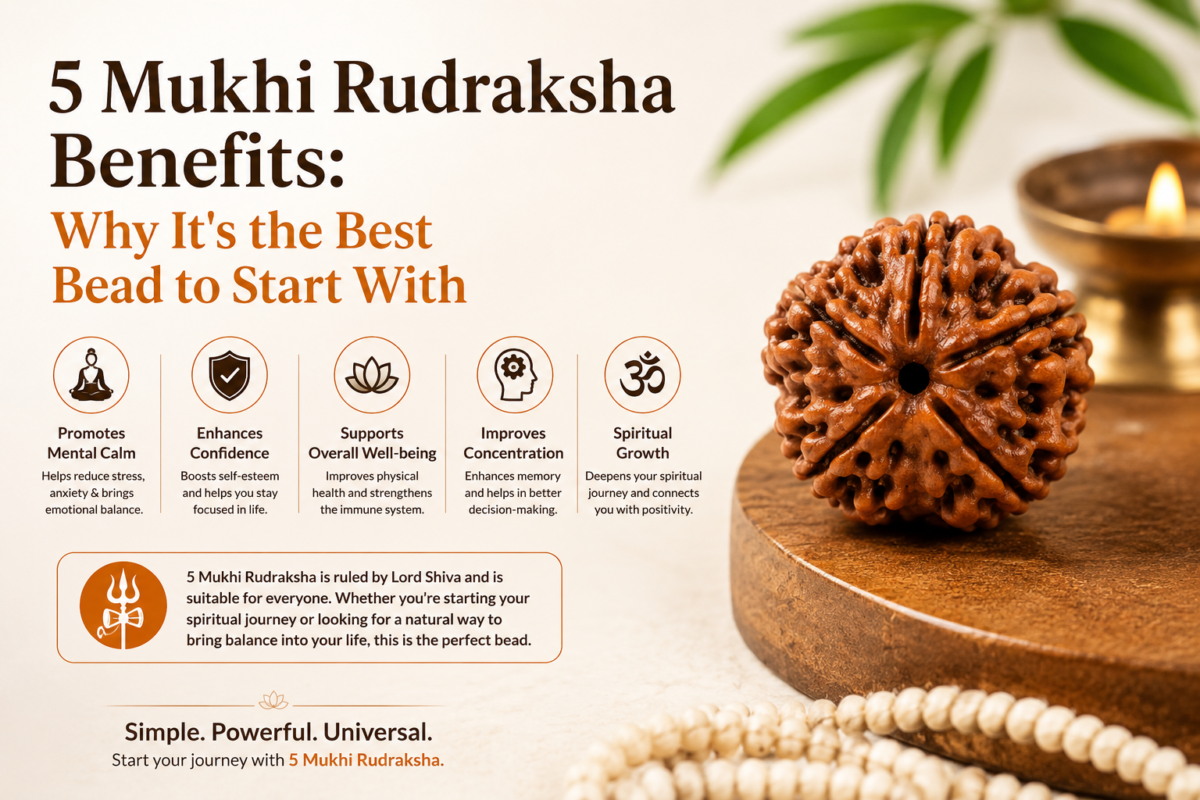
A 5 Mukhi Rudraksha is a rudraksha bead with five natural clefts or faces (mukhi means “face” in Sanskrit). It grows on the Elaeocarpus ganitrus tree, mostly found in Nepal, Indonesia, and parts of India.
Out of all rudraksha varieties, this one is the most naturally abundant, which is exactly why it’s the go-to bead for malas—those 108-bead strings you see people wearing or using for meditation.
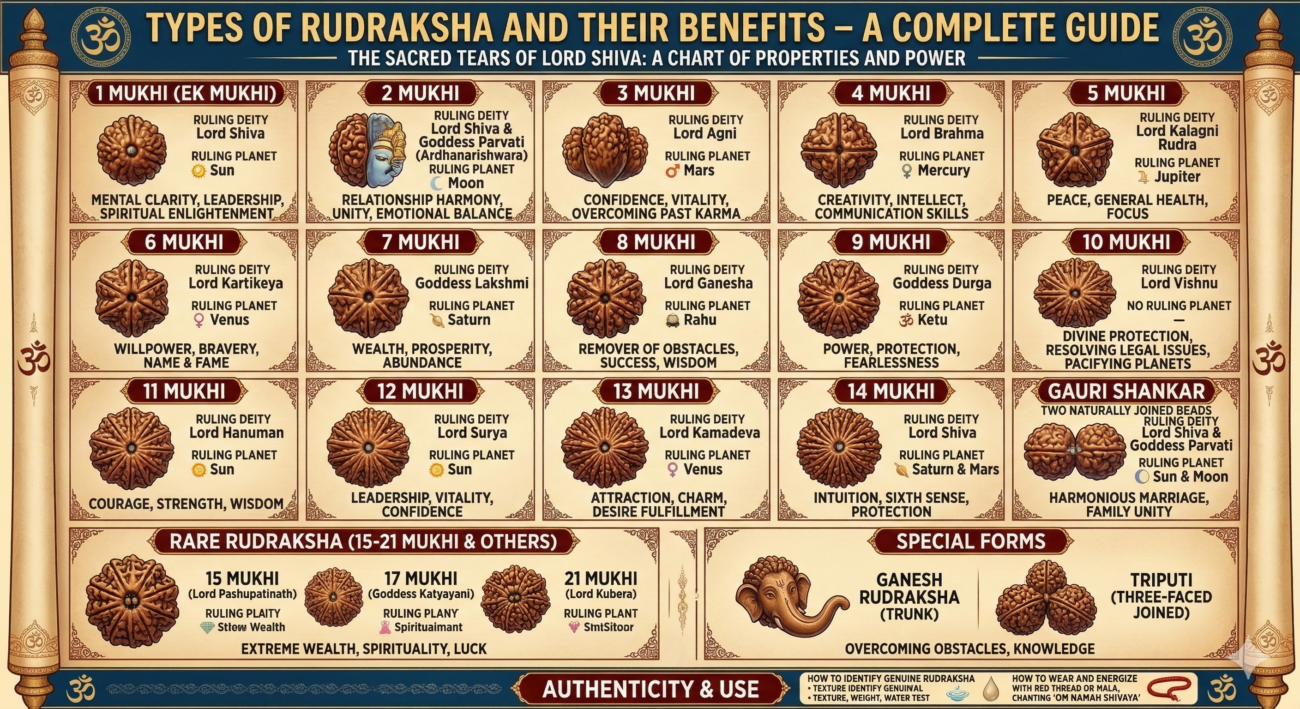
The 5 Mukhi Rudraksha is associated with Lord Shiva in his Kaal Agni form and is also linked to the planet Jupiter (Guru/Brihaspati).
The five faces are said to represent the five elements—earth, water, fire, air, and space—and the five forms of Shiva. In simple terms, it’s considered a bead of balance, wisdom, and inner peace. That’s a big part of why it’s the foundation of most rudraksha malas used for chanting and meditation.
Here’s where I’ll be honest with you: rudraksha benefits are rooted in tradition and personal belief rather than clinical proof. People wear it for different reasons, and experiences vary. With that said, here’s what it’s traditionally believed to offer:
Mental calm and focus — Many wearers say it helps quiet a racing mind, which is why it’s popular for meditation and stress relief.
Emotional balance — It’s associated with reducing anxiety, anger, and restlessness.
Spiritual growth — Being connected to Jupiter, it’s linked to wisdom, learning, and clarity of thought.
Everyday accessibility — Unlike rarer mukhis, it suits almost everyone and has no strict rules around who can wear it, making it a good starting point for beginners.
If you’re drawn to it for meditation or a sense of grounding, that’s a genuinely reasonable reason to try one.
This is where you need to pay attention, because pricing varies wildly.
A single authentic 5 Mukhi Rudraksha bead typically ranges from around ₹50 to ₹300, depending on quality, size, and origin (Nepali beads usually cost more than Indonesian ones because they’re larger).
A full 108-bead mala generally falls between ₹300 and ₹1,500 for genuine beads, though premium certified malas can go higher.
Because this bead is so common, it’s also the most commonly faked or artificially carved. If a seller is charging thousands for a single ordinary 5 mukhi bead, that’s a red flag. And if a “rudraksha” is suspiciously cheap in bulk, it might be a betel nut imitation or a molded fake.
A quick buyer’s tip: Look for lab certification for anything you’re paying a premium for, check that the clefts run naturally from top to bottom, and buy from a seller who’s transparent about origin.
If you’re new to rudraksha, curious about meditation, or just want a meaningful, affordable spiritual accessory—the 5 Mukhi is honestly the perfect entry point. It’s accessible, widely available, and carries deep traditional significance without the hefty price tag of rarer beads.
Just buy smart, keep your expectations grounded, and choose it because it resonates with you.
Q: What is a 5 Mukhi Rudraksha used for?
A 5 Mukhi Rudraksha is mainly used for meditation, chanting, and daily wear. It’s traditionally associated with Lord Shiva and the planet Jupiter, and is believed to support mental calm, emotional balance, and spiritual growth.
Almost anyone can wear a 5 Mukhi Rudraksha. Unlike rarer mukhis, it has no strict restrictions around age, gender, or background, which makes it the most beginner-friendly rudraksha bead.
A single authentic 5 Mukhi Rudraksha bead usually costs between ₹50 and ₹300, while a genuine 108-bead mala ranges from ₹300 to ₹1,500. Prices vary based on size, quality, and origin (Nepali vs Indonesian).
To buy a 5 Mukhi Rudraksha online safely, choose sellers who offer lab certification, are transparent about the bead’s origin, and show clear images of the natural clefts. Be cautious of prices that seem too high for a common bead or suspiciously cheap bulk deals.
Check that the five clefts run naturally from top to bottom, look for lab certification on premium beads, and buy from trusted sources. Common fakes are made from betel nut or molded materials, so authenticity checks matter when you buy a 5 Mukhi Rudraksha online.
Yes, a 5 Mukhi Rudraksha is suitable for daily wear. Many people wear it as a single pendant or as a mala for regular meditation and chanting.