

Buying Rudraksha is not like buying normal jewellery. It is spiritual thing. People wear it for peace, focus, health, and connection with Lord Shiva.
But problem is simple — market is full of fake Rudraksha. Many people get cheated and they don’t even know.
So here I am sharing very simple, ground-level tests. No big science words. No lab. Normal buyer can understand and check.
Why Fake Rudraksha Is So Common
Truth is harsh. Original Rudraksha is limited in nature. Trees grow only in few places like Nepal, Indonesia. Demand is very high.
So sellers make fake beads using wood, seeds, plastic, even stone powder.
Fake one look shiny, smooth, perfect shape. Original one is never perfect.
Test 1: Look at Mukhi (Lines) Carefully
Mukhi means the natural lines on Rudraksha.
Original Rudraksha
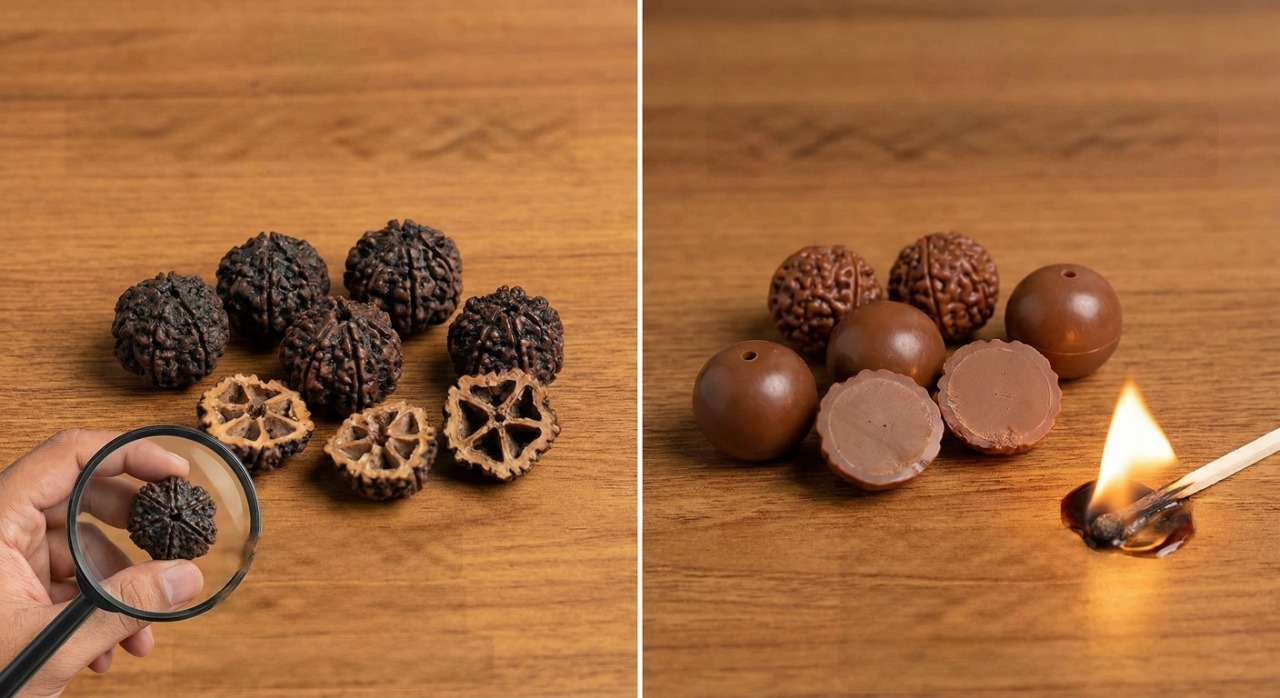
- Lines are deep, clear, going from top to bottom
- Lines are not too straight, little zig-zag type
- Mukhi never look machine-made
Fake Rudraksha
- Lines look carved or drawn
- Lines are too sharp or too perfect
- Sometimes lines stop in middle, not full bead
👉 Tip: Use mobile torch light and zoom camera. Very useful.
Test 2: Touch and Feel Test (Very Important)
Take Rudraksha in hand.
Original
- Feel little rough
- Natural texture, not slippery
- Weight feels normal, not too light
Fake
- Too smooth like polished stone
- Very light (plastic type)
- Sometimes feels waxy
Original Rudraksha never feels like glass or marble.
Test 3: Copper Coin Test (Common But Useful)
This test is popular, but not 100% final. Still gives idea.
Put Rudraksha between two copper coins and rotate.
If it rotates smoothly – chances of being original
If it slips or don’t rotate – mostly fake
⚠️ Remember: Some fake also pass this test. So don’t trust only this.
Test 4: Water Test (But Carefully)
Put Rudraksha in plain water for few hours.
Original
- May sink or float, both possible
- But water will not change color
- Bead will not swell or crack
Fake
- Color may bleed
- Bead may become soft
- Some float like thermocol
❌ Never do salt water test. It damages original Rudraksha also.
Test 5: Check the Hole (Most People Ignore This)
Look inside the hole of bead.
Original
- Hole is uneven
- Natural fiber marks inside
- Not perfectly round
Fake
- Hole very clean and straight
- Looks machine drilled
- Sometimes black burn marks
This is very strong sign.
Test 6: Price Reality Check
Let’s be honest.
If someone selling:
- 5 Mukhi at ₹300 with “100% original certificate”
- 7 Mukhi at ₹800 only
Then 90% chance it is fake.
Original Rudraksha cost money. No miracle discount.
Lab Certificate – Should You Trust?
Lab certificate helps, but only if lab is genuine and known.
Fake sellers also give fake certificates.
So always:
- Check lab name online
- Ask clear bead photos before buying
- Avoid WhatsApp-only sellers with no address
Nepal vs Indonesian – Which One Easier to Fake?
Nepal Rudraksha:
- Bigger size
- Deep mukhi
- Harder to fake
Indonesian Rudraksha:
- Small size
- Thin mukhi
- Easy to fake
Beginners should always choose Nepal Rudraksha.
Final Truth (Very Important)
No single test can confirm 100%.
You must check shape + mukhi + feel + hole + price together.
Original Rudraksha feels alive in hand. Fake one feels dead, like toy.
If your heart feels doubt, don’t buy.
Small Advice Before You Buy
- Buy from trusted seller only
- Ask for raw bead photos
- Don’t run behind cheap price
- Spiritual things should be pure, not shortcut